Courses & Curriculum
Core academics. Practical capability. A biblical lens for life.
The Village Community School of Sarasota has created a customized, fully integrated hands-on and practical life skills curriculum designed to build academic foundations and form capable, faithful young people through real-world application, apprenticeship-inspired progression, and meaningful experiences. Written by our Director and Founder, Daniella Rohr, completely unique to The Village Community School of Sarasota, and isn’t available anywhere else.
Certified and Qualified Teachers adapt curriculum each year using student assessments, teacher observation, parent input, and selected resources. At-home study helps students reinforce concepts and continue their homeschool progress.
Core Academics
Math
Level-based instruction, conceptual understanding, fluency, problem solving, measurement, budgeting, and practical application.
Reading
Foundational literacy, comprehension, vocabulary, discussion, informational reading, Scripture, stories, manuals, plans, and research.
Writing
Handwriting, composition, grammar, journals, project plans, business materials, reflection, communication, and presentation.
Language Arts
Grammar, vocabulary, speaking, listening, literature, communication, critical thinking, and clear expression.A
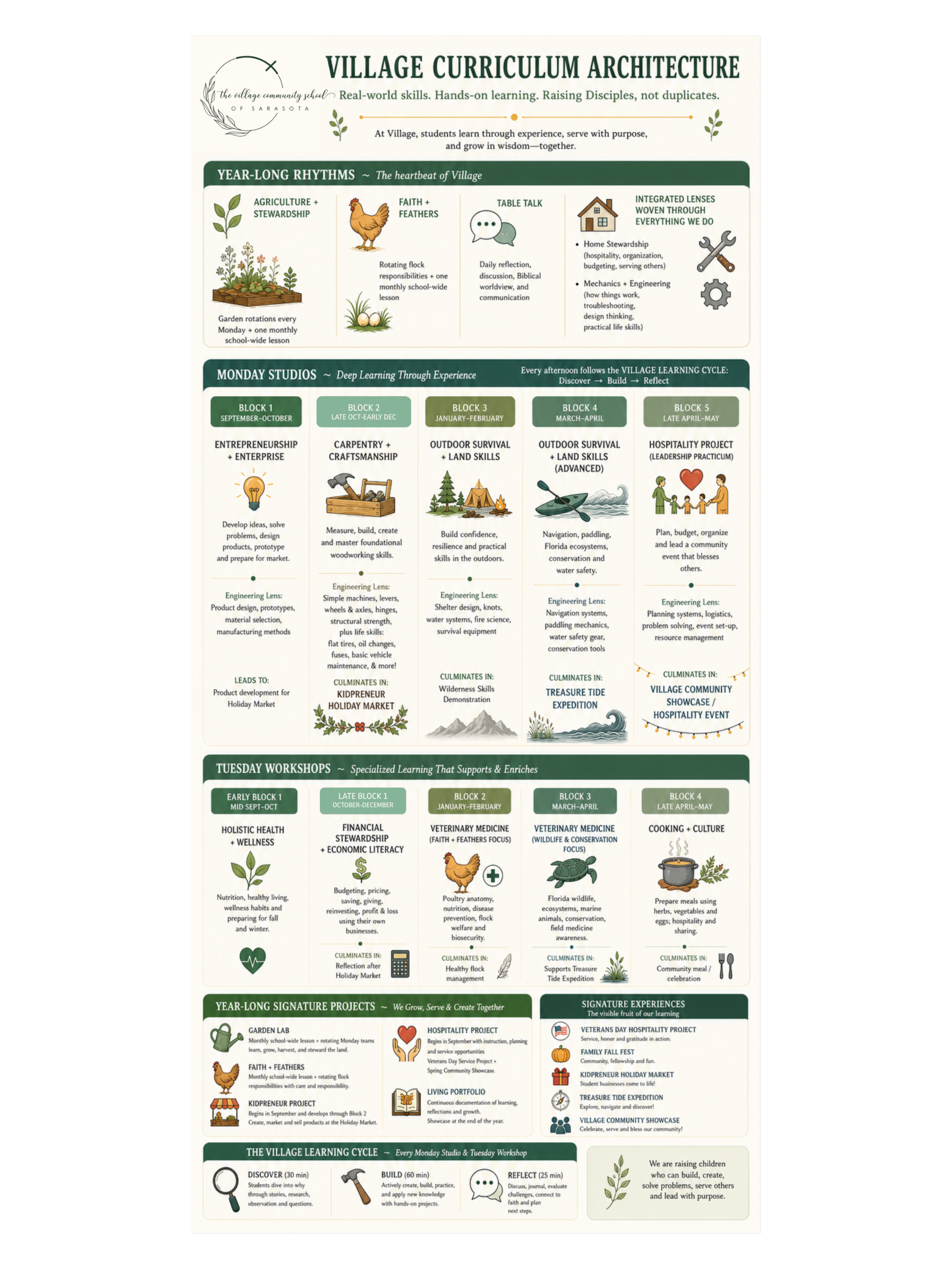
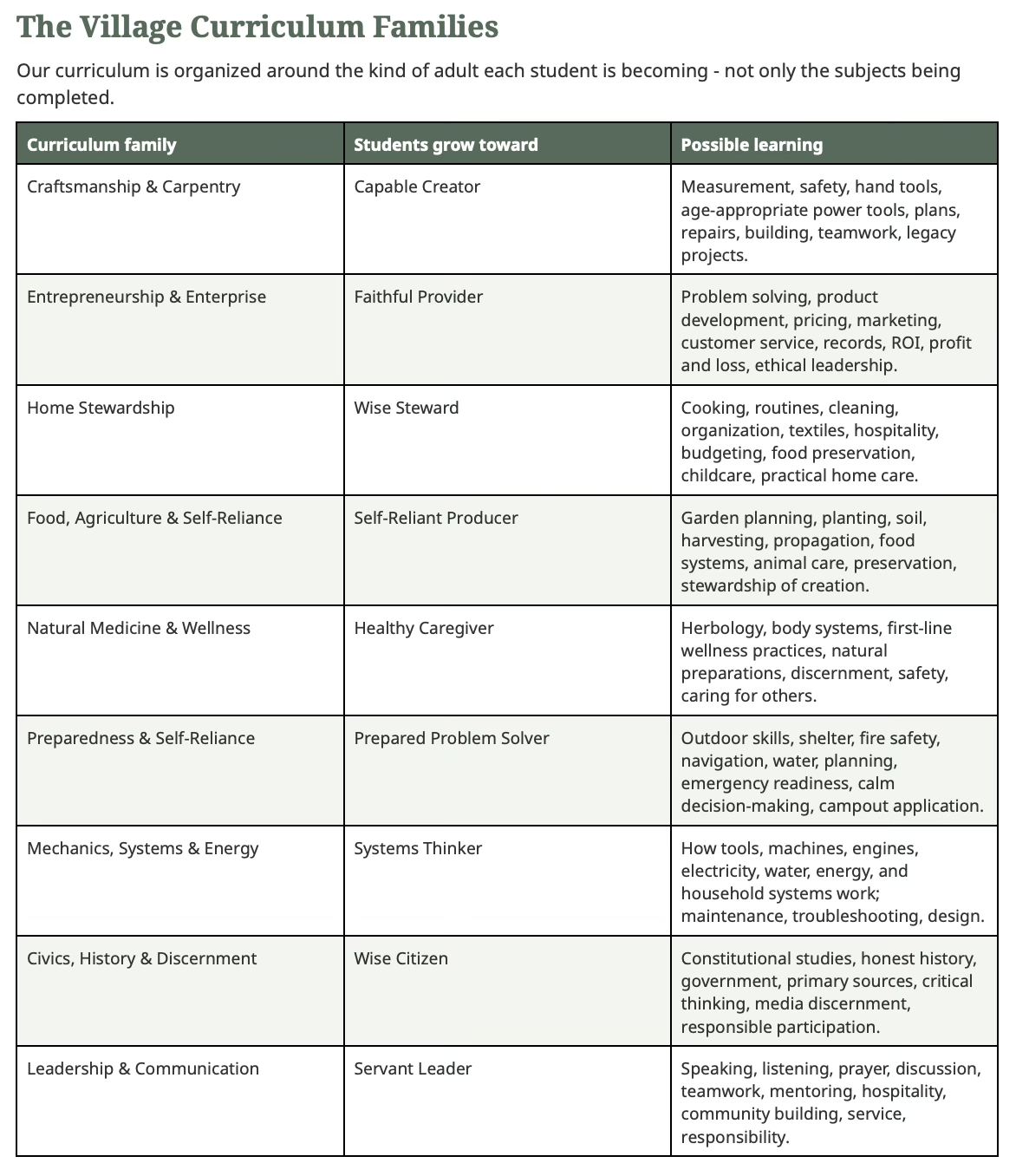
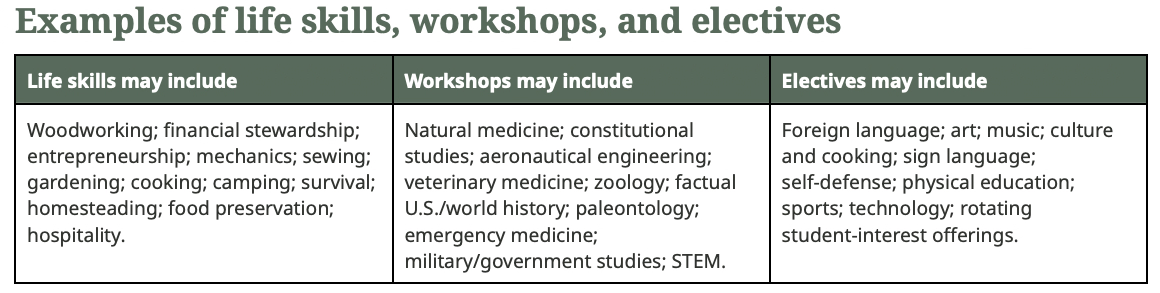
Course offerings rotate by season, staffing, student grouping, safety requirements, expert availability, and annual curriculum design. These are examples of previous and planned life skills, workshops, and electives potentially available, but may not be available each semester.

How Academics Become Real:
A Customized Curriculum Built For Growth:
Pre-semester assessments help teachers understand each group. Students are placed by readiness in core subjects and may move during the year. The curriculum is intentionally flexible in method but firm in mission: every lesson and experience must support academic growth, wise thinking, capability, faithfulness, and service.
THE FOUR VILLAGE QUESTIONS
Is it meaningful? Is it practical? Is it thoughtful? Is it formative?
Exceptional Value In One Integrated Program
A family could spend significant time and money assembling separate tutoring, academic classes, art, foreign language, woodworking, garden programs, entrepreneurship clubs, camps, Bible studies, co-ops, field trips, and social activities. The Village Community School of Sarasota intentionally weaves these into one coherent community and annual rhythm.